
The Founder’s Guide to Product-Market Fit
A Thought Leadership article we liked from VC Unfiltered:
From Idea to Product-Market Fit: 8 Key Questions Startups Should Ask
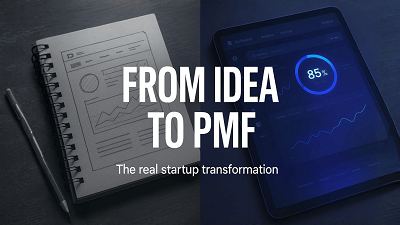
A common adage in the startup world is that the product you launch rarely ends up being the one you scale.
New ventures often evolve—sometimes dramatically—as founders learn what customers truly need. This evolution is part of the journey to product-market fit (PMF): that coveted alignment where your offering resonates so deeply that users can’t imagine life without it. Below, we’ll walk through 8 questions to ask yourself when crafting (and constantly refining) your startup idea, ensuring it’s both viable and scalable.
1. Are You (and Your Team) the Right Fit for This Field?
Expertise & Experience: Do you have specific domain knowledge or technical chops that give your team an edge? If you’re building in AI, is someone on your team well-versed in machine learning? If you’re tackling healthcare, do you deeply understand compliance, patient workflows, or hospital procurement?
Signal to Investors & Partners: The right founding team not only builds trust with potential customers but also reassures VCs that you’re equipped to tackle tough industry challenges.
Why It Matters
A big part of PMF is your ability to iterate quickly and empathize with user pain. If you’re immersed in the space—either as a user or subject-matter expert—you’ll spot issues faster and pivot more accurately.
2. How Big Is the Potential Market?
Market Size: VCs often look for markets capable of sustaining multibillion-dollar outcomes. Roughly, you’ll want a total addressable market (TAM) north of a few billion dollars if you’re aiming for VC backing.
Growing or Mature?: If the market is rapidly expanding (think AI in 2025, or climate tech), you might surf a wave of rising demand that accelerates growth.
Why It Matters
An otherwise incredible product that only a tiny sliver of people need may not satisfy venture-backed returns. Understanding the difference between a niche, profitable business, and a market big enough for exponential scale helps set the right trajectory early on.
3. Is There Competition—And Why That’s Good
Yes, Competition Exists: Don’t fear it. If you see zero competitors, that often implies zero market demand or a sign you haven’t searched thoroughly enough.
Uniqueness: The key is how you differentiate. Are you cheaper, faster, or more specialized? Do you solve an overlooked sub-problem?
Why It Matters
A robust competitive environment signals real customer needs. The question is how your offering stands out—through specialized features, brand, distribution, or domain knowledge. This differentiation can morph as you…
Read the rest of this article at vcunfiltered.beehiiv.com...
Thanks for this article excerpt and its graphics to VC Unfiltered.
Want to share your advice for startup entrepreneurs? Submit a Guest Post here.