
From Venture Dreams to Asset Reality
An article we liked from Thought Leaders William Godfrey of Tangible and Judith Ketelslegers of World Economic Forum:
Venture capital built the technology. Asset-based finance can scale it
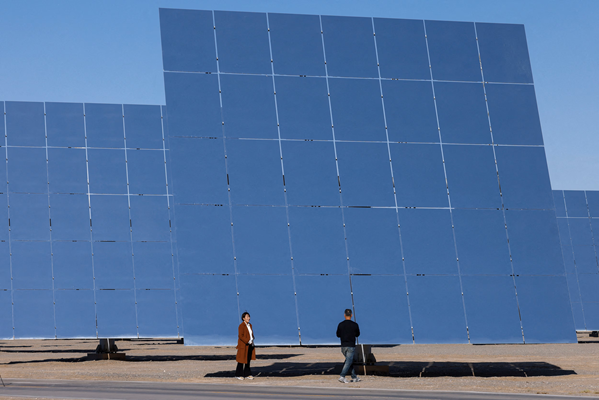
The defining challenges of this decade, including the race to compute, securing energy and food systems and building advanced manufacturing lines, require physical assets as well as software i.e. data centres, batteries, robotics, electrolyzers, transmission lines and production facilities.
Much of this technology already exists today. The bottleneck is increasingly one of deployment.
At the same time, available capital worldwide is expanding. Private credit assets under management are projected to approach $3 trillion by 2028, according to estimates by Preqin, reflecting rapid growth in non-bank lending over the past decade.
Institutional investors, including pension funds and insurers, continue to expand allocations to infrastructure and private debt in search of yield, duration and diversification.
Yet despite both technological readiness and capital availability, many hardtech startups face a familiar problem: once their technology works, early customers are secured and unit economics are proven, the financing playbook for transitioning to large-scale deployment is unclear.
Most turn to the familiar allure of venture capital and the equity markets, rather than recognizing the similarities between the assets they are trying to fund and the trillions of assets (such as real estate and cars) that are already funded through the debt capital markets via securitization structures.
Why tech infrastructure requires new financing models
Venture capital has been highly effective at financing early-stage innovation and absorbing technology risk. It is well-suited to funding research and development, product iteration and market entry
However, once a hardware company begins deploying repeatable, revenue-generating assets, continued reliance on successive equity rounds is inefficient and dilutive. The “hyperscaler” model that works for software – where the marginal costs approach zero – does not translate to capital-intensive industries.
Scaling physical infrastructure requires upfront capital for each additional unit. As deployment accelerates, so does the capital requirement. Meanwhile, many institutional investors have mandates specifically designed for cash-generating, asset-backed exposures. Infrastructure debt, equipment leasing, project finance and structured credit all provide frameworks for financing predictable cash flows tied to tangible assets.
The paradox goes as follows: large pools of capital are seeking stable, asset-backed returns, while companies building physical infrastructure struggle to access non-dilutive growth capital.
What asset-based financing does differently
Asset-based financing is not new. It has long been used in sectors such as transportation, real estate and energy infrastructure. Solar developers securitize power purchase agreements. Auto lenders package vehicle loans into asset-backed securities. Infrastructure projects are financed against contracted revenues.
At its core, asset-based financing shifts the underwriting focus from enterprise-level growth projections to the cash flows and collateral value of specific assets.
For scaling hardtech startups, this can be transformative. Instead of raising equity to fund each wave of deployment, companies can finance assets through…
Read the rest of this article at weforum.org…
Thanks for this article excerpt and its graphics to William Godfrey, Founder and CEO at Tangible and Judith Ketelslegers, Investor Community & Circular Economy Ecosystem Lead at World Economic Forum.
Want to share your advice for startup entrepreneurs? Submit a Guest Post here.