Hope vs. Discipline in Raising
An article we liked from Thought Leader Chris Tottman of Notion Capital:
The Reason Your Round Is Taking Longer Than It Should
Most founders raise like they are hoping.
The ones who close raise like they are running a process. Here is the complete six-week system.
I have watched hundreds of founders raise capital. The ones who close fast share one thing that has nothing to do with their deck, their metrics, or their story.
They run a process.
Not in a manipulative way. Not in a way that feels manufactured. But they treat fundraising the way a good sales leader treats a pipeline. They know who is in play, where each conversation is, what the next step is, and when to create urgency without lying about it.
The founders who struggle are almost always doing the opposite. They are having good meetings and waiting to see what happens. They are following up when they remember to. They are treating each investor conversation as a standalone event rather than as part of a coordinated process. And they are wondering why a round that should take six weeks is stretching into six months.
The difference is not the quality of the company. It is the quality of the process.
This article gives you the operating system I have used to coach founders through more raises than I can count. The free section gives you the framework. The paid section gives you the complete six-week process with the exact tools, sequences, and Claude prompts to run it.
Why Most Fundraising Processes Fall Apart in Week Three
A fundraise has a natural momentum problem.
Week one feels good. You have meetings. Investors are taking calls. The energy is high. Week two is similar. By week three, the meetings are slowing down, some investors have gone quiet, and the founder has no systematic way to know whether the silence is disinterest or just a busy week at the fund.
By week four, the process has lost its shape. The founder is chasing some investors, ignoring others, and has no clear picture of where the round actually stands. By week six, they are extending the timeline and resetting expectations.
I have seen this happen to strong companies with good metrics and compelling founders. The round does not collapse because the company is not fundable. It collapses because the process collapses.
Three things cause it every time.
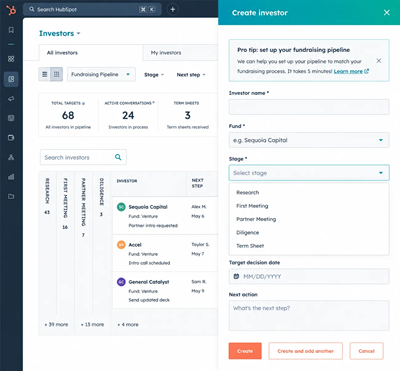
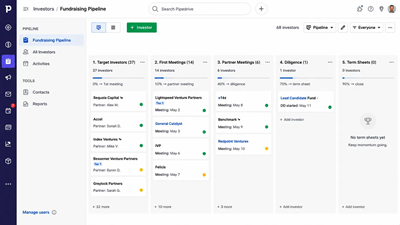
No investor pipeline discipline. Most founders track investor conversations in their head or in a loose spreadsheet. They have no systematic way to know which investors are warm, which are cooling, and which need a specific nudge to move forward. Without that visibility, they cannot manage the process. They can only react to it.
No manufactured urgency. Urgency closes rounds. Real urgency - a competing term sheet, a product milestone, a market timing argument - is the most powerful tool a founder has. But even when real urgency does not exist, a well-run process creates the perception of momentum. Investors move faster when they believe others are moving. Most founders do not engineer this deliberately. The ones who close fast always do.
No sequencing strategy. Who you talk to first matters as much as who you talk to at all. Talking to your top-choice lead investor in week one, before you have your story tight and your process running, is one of the most common and most costly mistakes founders make. The sequencing of investor conversations is a strategic decision. Most founders treat it as a calendar management problem.
The Four Metrics Every Founder Should Track During a Live Raise
I ask every founder I work with to track four numbers throughout their fundraise. Not conversion rates. Not pipeline value. Four simple metrics that tell you whether your process is healthy or broken.
Meetings per week. A healthy seed process runs ten to fifteen first meetings in the first three weeks. If you are below that, your targeting is too narrow or your outreach is not converting. If you are above twenty, you are moving too fast and will not have time to follow up properly.
First to second meeting conversion. This is your pitch conversion rate. Industry average sits around 30 percent. If you are below 20 percent consistently, something is wrong with the pitch or the investor fit. If you are above 50 percent, you are probably not…
Read the rest of this article at the-founders-corner.com...
Thanks for this article excerpt and its graphics to Chris Tottman, General Partner at Notion Capital.
Want to share your advice for startup entrepreneurs? Submit a Guest Post here.