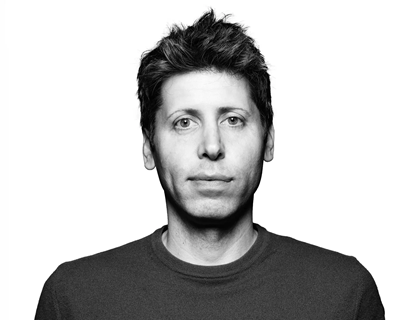
10 Startup Lessons From Sam Altman
An article we liked from Thought Leader Ruben Dominguez:
Sam Altman Ships AI to 900 Million People a Week. He Still Reads His Inbox Like It's 2006.
He runs the most-used AI product on earth and can't out-run his own habits.
10 lessons from what he'll admit on tape, and what it costs him.
Sam Altman runs the company shipping AI to 900 million people a week.
He still opens his inbox the old way: click, scroll, find the email that hurts least, answer that one first.
“The thing to me that feels most psychologically inconsistent about myself is that I have for 20 years been using computers the same way.”
He said that to David Senra on the Founders podcast, and called it the thing that bothers him most about how he runs his own life. Senra pushed him on Toby Lütke’s product habits, a 2015 bet the field called nearly impossible, and why OpenAI killed 2 products people actually loved.
I watched the full interview so you can skip it.
Here are the 10 takeaways that matter.
If the CEO of OpenAI can’t upgrade a 20-year habit, the rest of us need the upgrade to do the work for us.
Most of us run meetings the way Altman runs his inbox: notes from memory, follow-ups that slip.
1. Toby Lütke Told Sam Altman Who’s Building the AI-Native Shopify (It Isn’t Shopify)
Altman opens the interview talking about a rival CEO, and not the way executives usually talk about each other on a podcast.

“He said somebody was going to build the AI native version of Shopify. And he said, and it’s going to be me.”
Lütke doesn’t send OpenAI polite feedback. He writes software himself, tests models himself, and sends notes detailed enough that Altman brings them up unprompted, on a competitor’s show, unasked.
Most CEOs run a company through layers of people, and each layer smooths a rough edge before it reaches the top. Lütke skips the layer, and that’s Altman’s read on why he keeps seeing around corners.
He’s also put a specific bet on record: 2026 is the year every AI-native product operating model makes an existing software business contestable. Altman agrees with the direction and only argues with the speed. He traces his own miscalibration back to GPT-4’s 2023 release, when he expected disruption to hit fast. It didn’t.
The economy runs on inertia. People keep buying from the vendor they already have, whether or not something better sits three tabs away.
Planning to test whether your own category is actually contestable in 2026, worth tracing the receipts first:
Sam Altman: 3 Months of Work Now Takes 7 Minutes
Inside OpenAI: The Operating Model That Makes 2 Engineers Beat 200
Nobody Cares About the Model Now. It’s About the Type of Moat
2. Sam Altman Built the Tool That Replaces His Own Workflow. He Still Won’t Use It.
This admission undercuts everything else Altman says about how fast AI adoption should move.

“The thing to me that feels most psychologically inconsistent about myself is that I have for 20 years been using computers the same way.”
Senra had raised Larry Ellison watching customers ignore software that solved their exact problem decades before OpenAI existed. Altman’s version was closer to home: after Netflix started shipping DVDs by mail, people kept driving to Blockbuster, for no reason that survives scrutiny now.
He has Codex, built to handle most of his day-to-day computer work faster than he can by hand, and he still clicks between apps manually. He still scrolls his inbox hunting for the least painful email to open first. Ask him whether he likes doing it that way, and he’ll say no, and mean it.
“By revealed preference, I have a better way to do it now. I can do it faster. And I still do it that way.”
Ingrained habits don’t change because a better option sits next to the old one. They change once the old choice disappears entirely.
3. AI Is Living Through Its Palm Trio Era, and Sam Altman Says So Himself
Altman named the exact moment the industry is standing in, and it isn’t a flattering one.

“The phase that we're in now reminds me of like smartphones before the iPhone.”
He carried a Palm Trio around 2003 or 2004, back when most of the underlying technology already existed. What was missing wasn’t hardware. It was multi-touch, and more than that, the single product idea that made the iPhone the iPhone instead of just another smart-ish phone.
He thinks AI already has its pieces: model intelligence, agents, context windows that keep stretching further. What it hasn’t had is…
Read the rest of this article at the-ai-corner.com...
Thanks for this article excerpt and its graphics to Ruben Dominguez.
Want to share your advice for startup entrepreneurs? Submit a Guest Post here.